Sata Andagi: Okinawa's Street-Stand Doughnuts
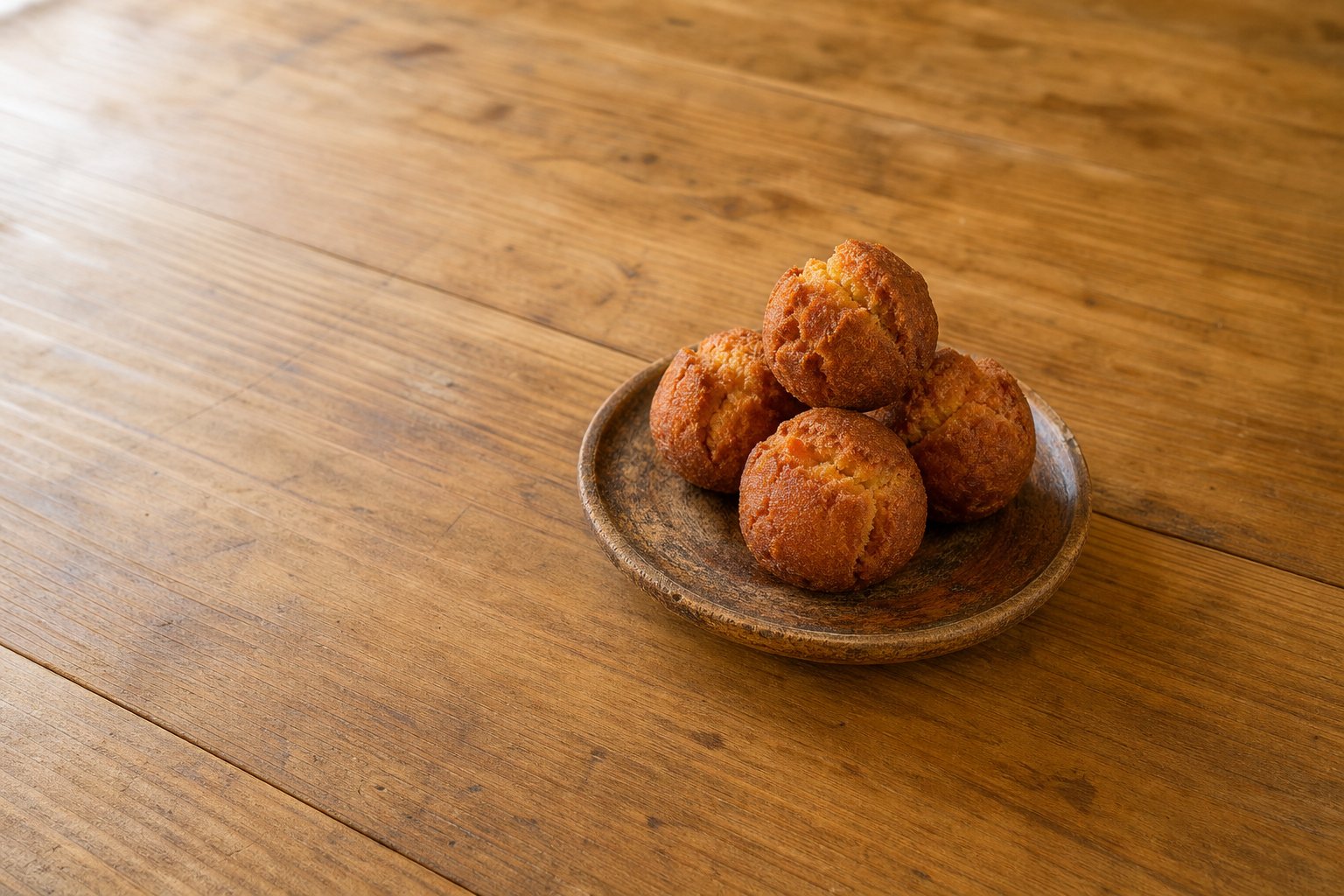
Sata andagi are small, dense doughnut balls, a familiar snack at market stands and bakeries in Okinawa. You can make them at home with only flour, sugar, eggs and baking powder, plus oil for frying, and no yeast or rising time. Fry them slowly, and they crack open on top as they cook.
Where you'll find it, and how it's eaten Street food
Sata andagi are sold at market stands, bakeries and snack shops in Okinawa, and are also made at home. They are eaten at room temperature, by hand. They are filling, so one or two is plenty with a cup of tea.
- With jasmine tea (sanpin-cha)
- At celebrations
- Bought from market stands
- Packed in a box as a gift
They taste best the day they are made. Keep leftovers in an airtight container and eat them within a couple of days.
Make it at home: ingredients about 12 balls
| Ingredient | Amount | Notes and swaps | Allergens |
|---|---|---|---|
| Large eggs | 2 | room temperature mixes more easily | egg |
| Granulated sugar | 1/2 cup (100 g) | swap half for dark brown sugar for a deeper taste | – |
| Neutral oil | 1 Tbsp | for the dough; canola or vegetable oil | soy if soybean or "vegetable" oil |
| All-purpose flour | 1 1/2 cups (200 g) | sift together with the baking powder | wheat |
| Baking powder | 1 tsp | check the date; old powder rises less | – |
| Oil for frying | about 4 cups | enough for about 2 in (5 cm) in a small pot | soy if soybean or "vegetable" oil; peanut or sesame if you use those oils |
This recipe has no pork and no alcohol. It contains wheat and egg, plus soy if your oil is soybean or "vegetable" oil. As written it has no milk, fish, crustacean shellfish, tree nuts, peanuts or sesame (the nine major US allergens are egg, milk, wheat, soy, fish, crustacean shellfish, tree nuts, peanuts and sesame). Allergens can vary by brand — check the labels, especially for baking powder and oil.
Want the island taste? If you can find Okinawan brown sugar (kokuto), use it in place of half the sugar for a deeper, toasty flavor.
How to make it 6 steps · about 40 min
Whisk the eggs and sugar in a bowl until the sugar mostly dissolves. Stir in the 1 Tbsp of oil.
Sift in the flour and baking powder. Fold with a spatula just until no dry flour is left.
Cover the bowl and leave it while the oil heats. Resting makes the dough easier to shape.
Use a heavy, small pot so the oil is deep enough. Clip on a thermometer and heat over medium-low.
Scoop about 1 1/2 Tbsp of dough and roll it into a ball the size of a golf ball. Slide it gently into the oil. Fry 4 or 5 at a time.
Turn them now and then. As they cook, the tops split open, and many roll over by themselves. They are done when deep golden and a skewer comes out clean. Drain on a rack.
Where it comes from History
The name is in the Okinawan language. Sata means sugar, and andagi means fried in oil. So sata andagi is simply "sugar, fried."
The sweet is often said to come from Chinese fried dough snacks, brought over during the centuries when the Ryukyu Kingdom traded closely with China. Over time it became a home snack that families make for themselves.
The crack on top matters. When a ball opens up, people say it looks like a smiling face or a flower in bloom, so sata andagi is seen as a happy, lucky sweet for celebrations.
Okinawa's food culture is sometimes talked about in stories about long lives, under the name "Blue Zones." This post is only about the sweet itself: a treat, made for snacks and for good days.
Glossary
More from Okinawa: Okinawa on a plate: street snacks, markets and everyday food